A purchasing change can also be a technical change
Replacing a peptide supplier may look straightforward when two quotations list the same sequence and nominal purity. In practice, the materials can differ in salt form, analytical methods, impurity profile, packaging, and documentation. A supplier transition should therefore be evaluated as more than a change of vendor name. Procurement, laboratory staff, and quality reviewers need a shared definition of what constitutes an acceptable replacement.
This article provides a general purchasing and quality framework. It does not report a new transaction, make a current market-size claim, or imply that a particular supplier has changed ownership. The focus is how a buyer can assess a proposed change using available evidence rather than assume that matching catalog descriptions establish equivalence.
Start with the intended use and applicable requirements
The level of supplier qualification depends on what the material will be used for and which requirements govern the organization. Exploratory laboratory research, a validated analytical workflow, and regulated pharmaceutical manufacturing do not carry identical obligations. Identify the applicable requirements before deciding which supplier records, audits, or tests are necessary.
ICH Q10 is an official pharmaceutical quality-system reference. Sections 2.7 and 3.2.3 address outsourced activities and purchased materials, and change management, respectively. Its principles offer a useful framework for this discussion, but referencing the document does not certify a supplier. Nor does it mean that every research-material purchase is subject to the full set of pharmaceutical manufacturing obligations.
Describe the material before comparing suppliers
Create a baseline specification that identifies the peptide, sequence where applicable, modifications, declared salt form, and the tests used to assess the material. Specify how purity and content are reported. Include water, residual solvents, counterions, or other tests when they are relevant to the intended application. Avoid treating every test as universally necessary or assuming every supplier already performs it.
Packaging deserves the same attention as the powder. Container materials, closure arrangements, pack sizes, and documented transport conditions may affect how the laboratory receives and handles a lot. The baseline should say which characteristics are essential, which may change after review, and which remain unknown. A shared document prevents procurement and the laboratory from approving different versions of the requirement.
Identify what is actually changing
| Possible change | Useful review question |
|---|---|
| Manufacturing site or subcontractor | Who performs synthesis, purification, testing, and release? |
| Analytical method | Are the old and new results comparable on the same basis? |
| Salt form or isolation process | Does the composition still match the agreed material definition? |
| Container or pack size | Is compatibility and handling performance supported? |
| Shipping arrangement | Can the receiving team evaluate transit conditions and exceptions? |
A different chromatographic method can produce a different-looking impurity profile even when the sample is unchanged. Conversely, similar headline results can conceal differences not captured by those methods. Review the underlying evidence and identify where additional comparison is needed rather than assuming either sameness or failure from one number.
Plan the qualification before ordering the comparison batch
Define the evaluation criteria in advance. A comparison may include document review, testing of a representative sample, review of analytical records, and a limited assessment in the buyer’s own workflow. The scope should reflect the consequences of a mismatch. Predetermined criteria make it less likely that the team will relax its standard simply because stock is running low.
Record which batch was evaluated, which methods were used, and whether the tested sample is representative of the material expected in routine supply. One successful sample does not prove that all future lots will be identical. The assessment should distinguish observations from assumptions and list any residual uncertainties that the buyer accepts or requires the supplier to resolve.
Agree responsibilities and notification rules
Specify who answers technical questions, investigates complaints, communicates significant changes, and supplies the supporting records. For activities performed by another organization, document how information will flow between the parties. ICH Q10 places importance on evaluating the suitability of providers and controlling outsourced work; a written division of responsibilities helps put that principle into practice.
Agree how changes will be notified and assessed, rather than relying solely on a general sales statement. Review whether the supplier is the actual manufacturer or a distributor and what traceability is available through the chain. No role is automatically unacceptable, but an unclear chain of responsibility can make a quality investigation much harder.
Monitor the transition after approval
A supplier change is not complete when a purchase order is signed. Check initial deliveries against the approved specification, compare documentation with the qualification sample, and record any unexpected behavior in the laboratory. Define who can release the material for use and who can place it on hold. Follow-up review tests whether the intended benefit was achieved without creating new problems.
For a proposed PeptaCo supply discussion, start with the material catalog, then request current batch documentation and clarify the available analytical package. Use the quality page and custom-service discussion as starting points, not substitutes for evidence. Reliable qualification depends on records and fit-for-purpose evaluation rather than promotional labels.
References and further reading
- FDA: ICH Q10 Pharmaceutical Quality System, April 2009
- ICH Q10 full guidance: sections 2.7 and 3.2.3
PeptaCo supplies materials for qualified research, analytical, and formulation-development purposes. Products are not intended for direct consumer use. This article is general technical education, not a batch specification, regulatory approval, or a human-use protocol.
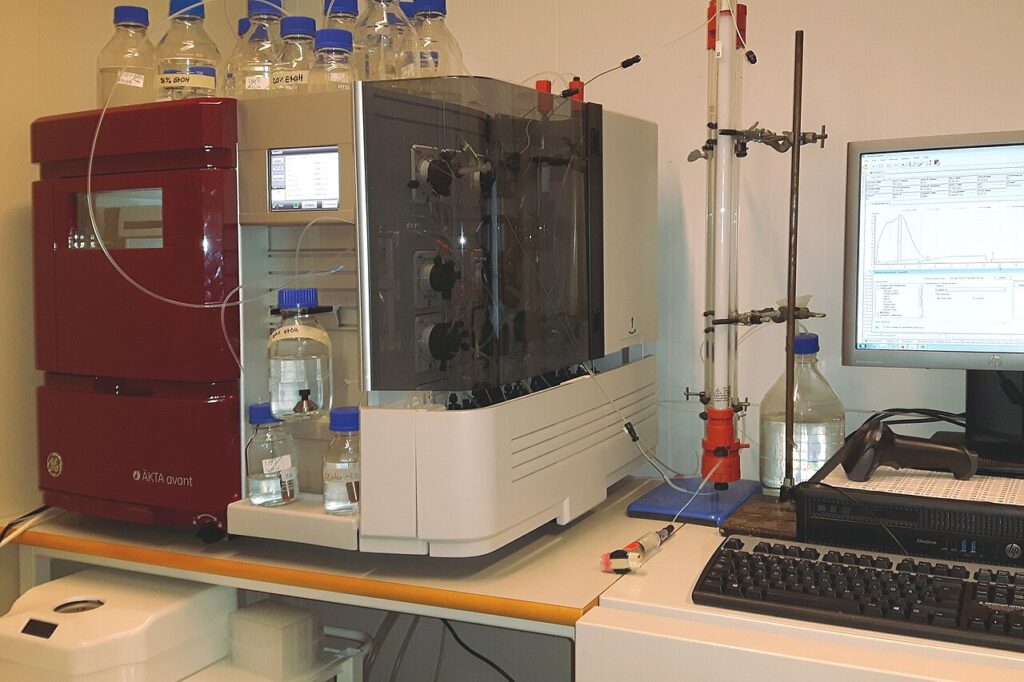
Illustrative banner: GE Healthcare Akta Avant 25 FPLC system.jpg by Mjeltsch, CC BY-SA 4.0, via Wikimedia Commons. Displayed at reduced resolution; the site may crop the display to fit the banner. The equipment and materials pictured are illustrative, not PeptaCo facilities, products, or batch results.