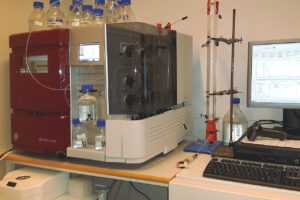
The landscape of biotech peptide news is currently defined by a massive realignment of capital and technological paradigms. Recent developments highlight a surge in venture funding for artificial intelligence-driven drug discovery, alongside significant clinical and regulatory milestones for RNA-based therapeutics and long-acting modalities. For stakeholders in the peptide supply chain—including research laboratories, compounding pharmacies, and cosmetic OEMs—these upstream shifts are not merely abstract industry trends. They fundamentally alter the requirements for raw material sourcing, analytical verification, and formulation development. As discovery platforms accelerate the identification of novel biological targets, the downstream demand for highly characterized, complex peptide raw materials continues to intensify.
AI-Driven Discovery and the Demand for Complex Raw Materials
Artificial intelligence is rapidly transforming the early stages of therapeutic and cosmetic discovery. Recent venture capital injections into AI-driven biotechs underscore a strategic pivot toward mining complex biological datasets, including plant and microbial proteomes, to identify novel peptide candidates. This computational approach accelerates the design of non-natural amino acid sequences, complex cyclic structures, and highly specific receptor ligands.
For raw material suppliers and buyers, this evolution necessitates a corresponding upgrade in analytical capabilities. Traditional verification methods are often insufficient for AI-designed peptides, which may exhibit unique isobaric impurities or complex diastereomeric profiles. Consequently, the reliance on high-resolution Mass Spectrometry (Mass Spectrometry) and advanced chromatographic techniques is paramount. Buyers must demand comprehensive Certificate of Analysis (COA) documentation that includes orthogonal data, ensuring that the structural integrity and sequence fidelity of these novel compounds meet rigorous research standards. Deconvoluting MS/MS fragmentation patterns for these non-natural sequences requires specialized software and highly trained analytical personnel.
Long-Acting Modalities and Formulation Matrix Challenges
Another dominant theme in current biotech peptide news is the industry-wide push toward long-acting and extended-release modalities. The development of injectables designed for prolonged receptor engagement requires peptide active pharmaceutical ingredients (APIs) with exceptional purity and specific physicochemical properties. The incorporation of fatty acid chains or specific amino acid substitutions significantly alters the lipophilicity and aggregation propensity of the raw material.
In the realm of metabolic and receptor research, compounds such as Semaglutide, Tirzepatide, and Retatrutide exemplify the complexity of modern long-acting peptides. Sourcing these research compounds requires stringent Quality (Quality) controls. The presence of truncation impurities, deletion sequences, or misfolded aggregates can severely impact the performance and stability of the final formulation matrix. Therefore, laboratories must employ robust HPLC (HPLC) gradient elution strategies to resolve these critical impurities during incoming raw material QA, ensuring precise peak integration and system suitability.
RNA and Peptide Conjugates: Analytical Sourcing Strategies
The recent successes and public offerings of RNAi and RNA-based therapeutics highlight a converging trend: the integration of peptides with nucleic acid technologies. Peptides are increasingly utilized as targeted delivery vectors for RNA therapeutics, creating hybrid conjugates that require specialized manufacturing and analytical oversight. This intersection demands advanced OEM/ODM (OEM/ODM) capabilities to navigate the complex interfacial dynamics between the peptide vector and the nucleic acid payload.
For research organizations evaluating these hybrid modalities, sourcing raw materials with verified endotoxin clearance and precise stoichiometric ratios is critical. The analytical burden shifts from simple purity assessment to comprehensive conjugate characterization. Formulators must ensure the peptide remains correctly folded and free from aggregation while maintaining the structural integrity of the RNA component, requiring specialized native chromatography techniques and rigorous batch documentation.
Strategic Sourcing and Supply Chain Resilience
As the biotech sector consolidates and capital flows toward high-potency modalities, supply chain resilience becomes a primary concern for all downstream stakeholders. Whether a compounding pharmacy sourcing foundational research compounds like BPC-157 or a cosmetic OEM formulating with GHK-Cu, the volatility in the broader biotech market can impact raw material availability, lead times, and pricing.
To mitigate these risks, procurement teams must diversify their supplier base and implement rigorous supplier qualification protocols. Evaluating a supplier’s capacity for scale-up, their adherence to current Good Manufacturing Practices (cGMP), and their transparency in providing full analytical datasets are essential steps. Furthermore, maintaining strategic inventory buffers for critical research compounds ensures uninterrupted laboratory operations and formulation development cycles.
| Macro Biotech Shift | Impact on Peptide Raw Materials | Required Analytical Response |
|---|---|---|
| AI-Driven Discovery | Increased complexity, non-natural amino acids, cyclic structures | High-resolution MS/MS, orthogonal COA data |
| Long-Acting Modalities | Fatty acid conjugations, altered lipophilicity, aggregation risks | Advanced HPLC gradient elution, impurity profiling |
| RNA-Peptide Conjugates | Hybrid molecules, strict endotoxin limits, stoichiometric precision | Native chromatography, specialized conjugate characterization |
| Market Consolidation | Supply volatility, shifting capital flows, extended lead times | Diversified sourcing, rigorous supplier qualification |
Conclusion
The continuous evolution highlighted in biotech peptide news dictates that raw material sourcing can no longer be a passive procurement function. It must be a strategic, analytically driven discipline. By aligning sourcing strategies with the latest advancements in AI discovery, long-acting modalities, and conjugate technologies, research organizations and OEMs can ensure they possess the high-quality, well-characterized materials necessary to drive innovation forward.
PeptaCo supplies materials for qualified research, analytical, and formulation-development purposes. Products are not intended for direct consumer use.