Why one percentage cannot describe a peptide batch
A peptide certificate may display an impressive HPLC purity percentage without answering a second, equally important question: how much peptide material is present in the weighed powder? Those measurements describe different properties. Confusing them can distort solution preparation, supplier comparisons, and the interpretation of research results. An analytical review should separate identity, chromatographic purity, peptide content, and the other constituents of the material.
For buyers comparing the peptide catalog, the first step is to request the current lot documentation rather than infer performance from a product name or a single purity claim. A specification states an agreed requirement; a batch result records what a particular method measured. Neither substitutes for the method description or the reporting basis.
What HPLC area purity measures
In a typical UV-HPLC area-normalization report, the main peak area is divided by the total area of the peaks included in the calculation. The resulting percentage describes the detected chromatographic profile under the chosen conditions. Wavelength, integration rules, separation performance, sample preparation, and detector response all influence that result. Two laboratories can obtain different area percentages without weighing different amounts of peptide.
Area normalization is not automatically a mass-fraction assay. Related compounds may have different responses, and coeluting components can be difficult to distinguish. Water and some counterions are not represented by the peptide peak-area calculation. A clean-looking trace therefore does not establish dryness, counterion content, or absence of every possible impurity. Confirm that the chromatogram and its integration settings support the reported result.
What peptide content adds
Peptide content describes the proportion of peptide material relative to the sample on a stated basis. Bachem’s quality-control guide distinguishes net peptide content from purity and notes that peptide-related impurities can be included in net peptide content. That distinction matters: a content measurement is not necessarily a selective assay of the intended sequence.
Amino acid analysis can support composition and content determination after hydrolysis and quantification of amino acids. It does not reconstruct residue order, and the analytical method must account for hydrolysis behavior and other limitations. A quantitative, target-specific assay answers a different question. Ask whether the reported value represents total peptide material, the intended compound, or a result corrected for water and other constituents.
Reading the main fields together
| Reported field | Question answered | What it does not establish alone |
|---|---|---|
| Identity result | Does the sample support the expected identity? | Purity, content, or suitability for every use |
| HPLC area purity | How much of the integrated signal belongs to the main peak? | Mass fraction of peptide in the powder |
| Peptide content | What proportion is peptide material on the defined basis? | Sequence-specific purity unless the method is selective |
| Water determination | How much water is detected by the specified procedure? | All remaining non-peptide constituents |
| Counterion determination | What counterion amount was measured? | Universal compatibility with research assays |
A hypothetical reporting example
Consider an illustrative 10 mg sample with a reported peptide content of 80% on an as-received mass basis. Under that definition, the sample contains 8 mg of peptide material. If the same report lists 98% HPLC area purity, that second number should not automatically be multiplied by 8 mg to claim an exact amount of the intended sequence. Such a conversion requires justified response assumptions or a validated quantitative method.
This is a documentation example, not a PeptaCo batch result or a preparation instruction. Its purpose is to show why the reporting basis must accompany each number. If content is stated on a dried basis but the sample was weighed as received, the reviewer must resolve that mismatch before calculating a concentration. The same discipline applies when comparing prices per nominal milligram.
Questions to send to the analytical laboratory
Request the method identifier, detector settings, integration approach, and whether purity is an area percentage or a calibrated assay. For content, request the measurement technique, calculation basis, and treatment of counterions, moisture, and related peptides. For water and residual solvents, ask which tests were actually performed rather than assuming they appear on every certificate.
It is also useful to ask whether the analytical package includes a chromatogram, an identity assessment, and enough sample information to trace the results to the supplied lot. A molecular mass result supports identity but is not a complete substitute for sequence verification where that is needed. These questions fit naturally into a documented quality review before a material is accepted for quantitative work.
Turning the distinction into a purchasing requirement
A clear purchase specification names the tests, acceptance criteria, reporting basis, and required supporting records. Avoid demanding the same generic threshold for every project: the appropriate package depends on the intended research application and the consequences of an incorrect result. Record any missing information as an open question, not as an assumed pass.
For custom work, discuss the analytical package with the OEM/ODM team before placing the order. For an existing material, request current batch documentation. Comparing identity, purity, content, and non-peptide components together gives a more useful picture than ranking suppliers by one percentage.
References and further reading
PeptaCo supplies materials for qualified research, analytical, and formulation-development purposes. Products are not intended for direct consumer use. This article is general technical education, not a batch specification, regulatory approval, or a human-use protocol.
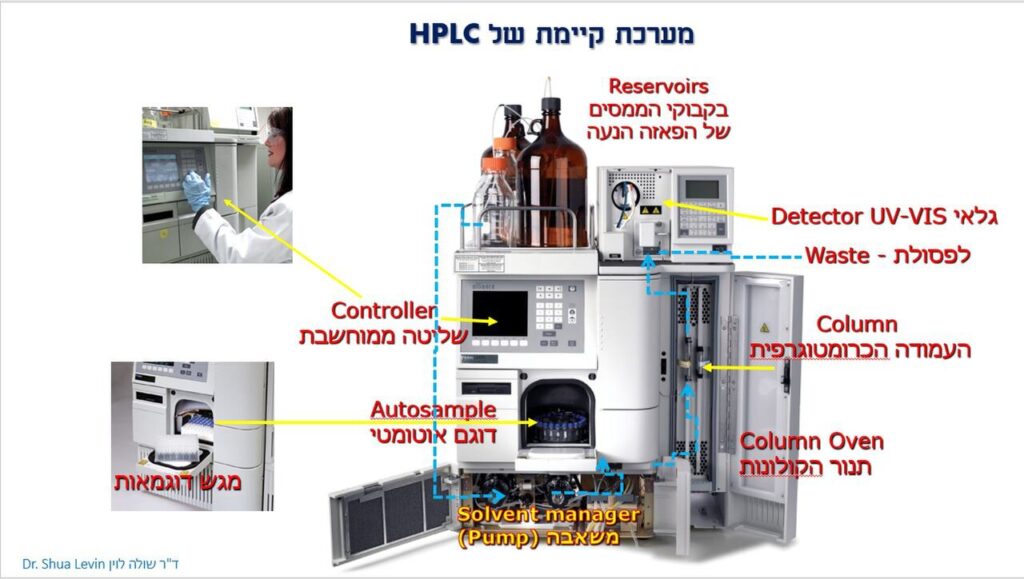
Illustrative banner: HPLC system – real.jpg by Shulalevin, CC BY-SA 4.0, via Wikimedia Commons. Displayed at reduced resolution; the site may crop the display to fit the banner. The equipment and materials pictured are illustrative, not PeptaCo facilities, products, or batch results.