Establishing the Sterile Handling Laboratory Environment
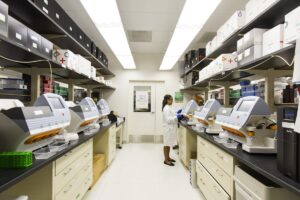
The integrity of peptide raw materials is highly dependent on the environmental controls maintained during processing. Establishing a dedicated sterile handling laboratory is the foundational step in ensuring that analytical references and formulation prototypes remain free from microbial and particulate contamination. In a research setting, this requires adherence to strict ISO-classified cleanroom standards, typically utilizing ISO 5 or ISO 7 environments depending on the specific sensitivity of the peptide sequence.
A critical component of this environment is the use of certified laminar airflow hoods. These hoods provide a continuous, unidirectional flow of HEPA-filtered air, creating a physical barrier against airborne contaminants. Routine environmental monitoring is non-negotiable in a sterile handling laboratory. This includes the deployment of settle plates for passive air sampling and the use of active air samplers to quantify viable particulate matter. Furthermore, surface monitoring via contact plates ensures that workspaces maintain the requisite Quality standards necessary for sensitive peptide manipulation.
Aseptic Techniques for Reconstitution and Aliquoting
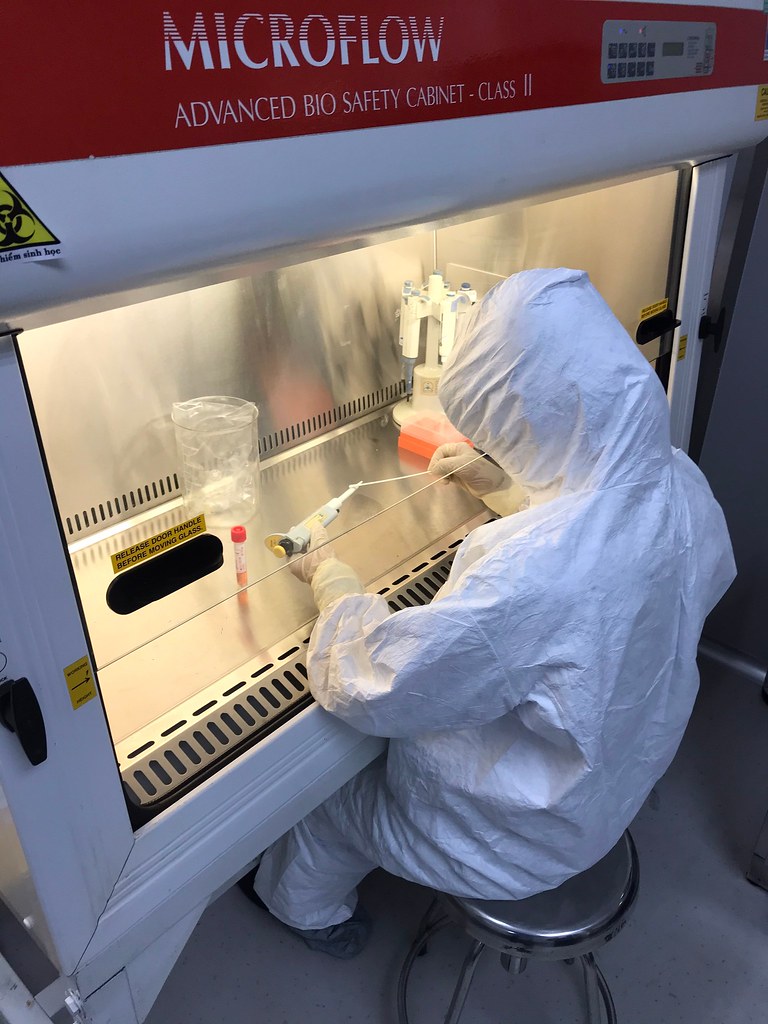
Once the environment is secured, personnel must execute rigorous aseptic techniques. The reconstitution and aliquoting of lyophilized peptides, such as GHK-Cu, require meticulous attention to detail to prevent cross-contamination and degradation. Personnel must don appropriate personal protective equipment (PPE), including sterile gowns, gloves, and face masks, ensuring that no skin flora or respiratory droplets compromise the raw material.
Surface disinfection protocols must be strictly followed before any materials enter the primary engineering control, such as the biological safety cabinet. All vials, stoppers, and equipment must be wiped down with an appropriate, residue-free disinfectant, such as 70% isopropyl alcohol or a validated sporicide. During the reconstitution process, operators should utilize sterile, pyrogen-free syringes and needles. The technique should involve directing the solvent gently against the vial wall rather than directly onto the peptide pellet, which helps prevent foaming and mechanical stress on the delicate peptide bonds. Aliquoting should be performed rapidly but deliberately, minimizing the duration that vials are exposed to the ambient laboratory environment.
Quality Assurance and Analytical Verification Post-Handling
Post-handling verification is a critical phase in the qa_application workflow. Even with optimal sterile handling laboratory practices, analytical verification is required to confirm that the peptide has not undergone hydrolysis, oxidation, or aggregation during the reconstitution process. The initial step involves reviewing the original COA to establish baseline purity and identity metrics.
Following handling, laboratories should employ high-resolution analytical techniques to verify the structural integrity of the peptide. HPLC is the industry standard for assessing purity and detecting any degradation products or truncations that may have occurred due to improper handling or suboptimal solvent pH. For definitive structural confirmation, Mass Spectrometry is utilized to verify the exact molecular weight of the peptide, ensuring that no unintended modifications or adducts have formed. These analytical checks are particularly vital when scaling up processes for OEM/ODM formulation development, where batch-to-batch consistency is paramount.
Storage Protocols for Research Compounds
Proper storage is the final pillar of sterile handling laboratory protocols. The stability of peptide research compounds is highly temperature-dependent. Lyophilized peptides generally exhibit greater long-term stability and should be stored at -20°C or lower in a frost-free freezer to prevent freeze-thaw cycles, which can induce aggregation. Once reconstituted, the stability window narrows significantly, and solutions typically require storage at 2°C to 8°C.
This is especially critical for complex, long-chain research compounds like Semaglutide, which are highly susceptible to enzymatic and chemical degradation if the cold chain is compromised. Reconstituted solutions should be aliquoted into single-use, sterile, low-protein-binding microcentrifuge tubes to eliminate the need for repeated freeze-thaw cycles. Each aliquot must be clearly labeled with the compound name, concentration, reconstitution date, and expiration date. Maintaining a rigorous cold chain and detailed inventory log ensures that analytical evaluations are performed on materials that have retained their original physicochemical properties.
| Protocol Phase | Key Requirement | Objective |
|---|---|---|
| Environment | ISO 5/7 Cleanroom & Laminar Flow | Eliminate airborne and surface particulates |
| Personnel | Full PPE & Strict Disinfection | Prevent human-derived microbial contamination |
| Reconstitution | Pyrogen-free solvents & gentle technique | Maintain peptide bond integrity and prevent foaming |
| Analytics | HPLC & Mass Spectrometry verification | Confirm purity and molecular identity post-handling |
| Storage | Strict cold chain & single-use aliquoting | Prevent freeze-thaw degradation and aggregation |
PeptaCo supplies materials for qualified research, analytical, and formulation-development purposes. Products are not intended for direct consumer use.