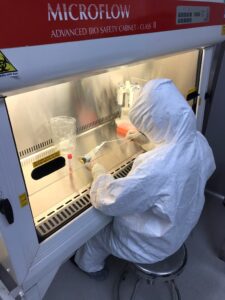
Introduction to Peptide Reconstitution in B2B Workflows
The transition of lyophilized raw materials into liquid matrices is a critical juncture in the B2B supply chain. Peptide reconstitution is not merely a physical mixing process; it is a highly controlled thermodynamic event that dictates the downstream analytical validity and formulation stability of the research compound. For compounding pharmacies, cosmetic OEMs, and independent research laboratories, establishing rigorous quality assurance (QA) protocols during this phase is essential to maintain the structural integrity of the active sequences.
In a B2B context, the reconstitution phase bridges raw material sourcing and final analytical evaluation. Any deviation in solvent selection, temperature control, or mixing kinetics can introduce variability that compromises the Certificate of Analysis (COA) benchmarks. Therefore, standardizing reconstitution workflows is paramount for ensuring batch-to-batch consistency and reliable data generation across the supply chain.
Solvent Matrix Selection for Optimal Peptide Reconstitution
Initial solvent selection is heavily dependent on the physicochemical parameters outlined in the material’s COA. Understanding the counterion composition, residual moisture content, and theoretical isoelectric point (pI) allows formulation scientists to select a solvent matrix that maximizes solubility while minimizing degradation pathways. The dielectric constant of the solvent system influences the electrostatic interactions between peptide side chains, directly impacting conformational stability.
Beyond simple solubility, the solvent matrix must act as a kinetic stabilizer. For highly hydrophobic sequences, the inclusion of organic modifiers must be balanced against the need to maintain a biologically relevant buffer capacity for subsequent in vitro assays. Furthermore, the ionic strength of the reconstitution medium can shield or exacerbate charge-charge repulsions, directly impacting the propensity for oligomerization. Formulation scientists must iteratively test solvent gradients, utilizing design of experiments (DoE) methodologies to map the stability landscape of the reconstituted peptide.
Analytical Validation and QA Protocols Post-Reconstitution
Post-reconstitution, the liquid matrix must undergo immediate analytical verification. High-Performance Liquid Chromatography (HPLC) is utilized to quantify purity and detect any early-stage hydrolytic cleavage or aggregation. Concurrently, Mass Spectrometry provides orthogonal confirmation of the molecular weight, ensuring that the reconstitution process has not induced unintended chemical modifications. Maintaining strict environmental controls during these analytical steps is a cornerstone of comprehensive Quality management.
In addition to primary purity and identity testing, advanced reconstitution QA requires the evaluation of higher-order structures. Size-exclusion chromatography (SEC) and dynamic light scattering (DLS) are invaluable for assessing the monomeric state of the reconstituted material. Detecting sub-visible particulates or micro-aggregates immediately post-reconstitution is critical, as these species can act as nucleation sites for further degradation during storage. Integrating these orthogonal analytical techniques into the standard reconstitution workflow provides a comprehensive physicochemical profile.
Matrix Compatibility Across Diverse Research Compounds
Different research compounds demand highly specialized solvent environments. In the GLP-1 receptor research landscape, lipidated research compounds such as Semaglutide require carefully buffered aqueous matrices, often supplemented with specific co-solvents, to prevent interfacial aggregation and maintain monomeric dispersion. The unique amphiphilic nature of these sequences necessitates precise pH and ionic strength controls to avoid irreversible precipitation.
Conversely, cosmetic OEMs formulating neuropeptides like SNAP-8 or copper-chelating sequences like GHK-Cu must optimize pH to preserve interfacial rheology and metal-coordination stability. For antioxidant research, handling Glutathione requires acidified aqueous systems to protect the reactive thiol moiety from premature oxidative dimerization. Scaling these specialized matrices from bench to pilot production requires the advanced infrastructure provided by dedicated OEM/ODM services.
Standardizing Scale-Up and OEM Formulation Handling
Transitioning from analytical-scale reconstitution to pilot-scale manufacturing introduces complex fluid dynamics and interfacial stresses. At larger volumes, the introduction of solvent must be carefully managed to prevent localized concentration gradients that can lead to irreversible peptide aggregation. Shear stress during mixing, thermal fluctuations during transfer, and headspace oxygen exposure must be strictly controlled.
Standard operating procedures (SOPs) for scale-up must incorporate in-process controls (IPCs) to monitor pH, osmolality, and visual clarity at defined intervals. By standardizing these parameters, B2B buyers ensure that the analytical profile of the pilot batch perfectly mirrors the initial laboratory evaluation, thereby de-risking the supply chain and ensuring consistent raw material performance across all downstream applications.
Solvent Selection Matrix for Common Peptide Classes
| Peptide Class | Primary Solvent | pH Target | Analytical Focus |
|---|---|---|---|
| Lipidated Peptides (GLP-1 analogs) | Aqueous buffer with co-solvent | 6.0 – 7.5 | Aggregation and oligomer profiling |
| Copper-Binding Peptides | Mild aqueous or buffered | 5.0 – 6.0 | Metal chelation verification |
| Neurotransmitter Fragments | Sterile water or saline | 4.5 – 5.5 | Sequence integrity and deamidation |
| Thiol-Containing Peptides | Acidified aqueous | 3.0 – 4.0 | Disulfide and free thiol analytics |
PeptaCo supplies materials for qualified research, analytical, and formulation-development purposes. Products are not intended for direct consumer use.