Introduction to Peptide Storage Kinetics
The rapid expansion of computationally designed peptides and heterochiral analogs has fundamentally shifted the landscape of raw material sourcing. As research organizations and formulation developers integrate complex sequences into their pipelines, understanding the thermodynamic and kinetic parameters of peptide storage is critical. Advanced structural engineering, including mesoporous peptide frameworks and novel amphiphilic designs, introduces unique conformational motifs that require stringent environmental controls to maintain matrix integrity over time.
For B2B buyers, compounding pharmacies, and cosmetic OEMs, preserving the chemical and structural fidelity of lyophilized and solubilized raw materials is paramount. Degradation not only compromises analytical accuracy but also disrupts downstream formulation development. This article explores the primary degradation pathways, environmental mitigation strategies, and analytical verification protocols necessary for robust supply chain quality assurance.
Primary Degradation Pathways in Raw Materials
Peptide raw materials are susceptible to several physicochemical degradation pathways. Identifying these mechanisms is the first step in establishing effective storage protocols.
Hydrolysis and Deamidation
Hydrolytic cleavage of the peptide bond is a primary concern, particularly in solubilized states or environments with elevated moisture levels. Deamidation, specifically the conversion of asparagine and glutamine residues to their corresponding aspartic and glutamic acids, is highly pH- and temperature-dependent. This pathway can alter the net charge of the molecule, subsequently affecting its chromatographic behavior and structural conformation.
Oxidation and Thiol Dynamics
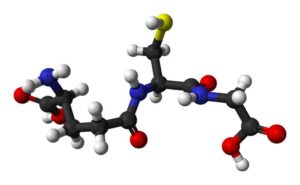
Oxidative degradation targets specific amino acid residues, notably methionine, cysteine, tryptophan, and histidine. For thiol-containing compounds like Glutathione, maintaining the reduced state is critical. Exposure to ambient oxygen or trace transition metals can catalyze disulfide bond scrambling or irreversible oxidation, fundamentally altering the raw material’s structural profile and analytical signature.
Aggregation and Conformational Shifts
Long-chain research compounds and complex analogs, such as Semaglutide, are particularly prone to intermolecular aggregation. Aggregation often proceeds through the formation of beta-sheet structures, driven by hydrophobic interactions and hydrogen bonding. This process can be accelerated by temperature fluctuations, freeze-thaw cycles in solubilized matrices, and interfacial stress, leading to the formation of high-molecular-weight impurities that are difficult to reverse.
Environmental Controls and Matrix Preservation
Effective peptide storage relies on the strict modulation of environmental variables to decelerate degradation kinetics. The Arrhenius equation dictates that reducing storage temperature exponentially decreases the rate of chemical degradation, making cold-chain logistics a non-negotiable aspect of raw material handling.
Moisture Exclusion and Hygroscopicity
Lyophilized peptides are inherently hygroscopic. The absorption of atmospheric moisture acts as a plasticizer, lowering the glass transition temperature of the solid matrix and increasing molecular mobility. This mobility facilitates hydrolytic and oxidative reactions. Utilizing desiccants, hermetic sealing, and controlled humidity environments is essential. Furthermore, novel engineered frameworks, such as crystallizable collagen-mimetic peptide amphiphiles, may exhibit distinct moisture uptake profiles that require customized containment strategies.
Photodegradation and Thermal Stress
Ultraviolet and visible light can induce photochemical reactions, particularly in aromatic and heterocyclic residues. Opaque or amber glass vials, coupled with light-impermeable secondary packaging, mitigate this risk. Thermal stress must also be controlled; even in the solid state, localized thermal fluctuations can induce partial melting or amorphous phase transitions, accelerating degradation.
Analytical Verification and Supply Chain QA
Robust storage protocols must be validated through orthogonal analytical techniques. Relying on a single analytical method is insufficient for comprehensive raw material verification.
Chromatographic and Spectrometric Profiling
HPLC remains the cornerstone for quantifying purity and detecting degradation products. However, chromatographic shifts must be confirmed using Mass Spectrometry to verify the exact mass of impurities and distinguish between structural isomers, such as deamidation variants. When reviewing a COA, buyers must ensure that both chromatographic purity and mass accuracy meet the stringent thresholds required for their specific applications.
Formulation and OEM Considerations
For entities engaged in OEM/ODM manufacturing, the stability of the raw material directly impacts the final product’s shelf life and efficacy. Cosmetic and topical formulations utilizing sequences like GHK-Cu or SNAP-8 require raw materials with verified metal-chelation stability and minimal aggregation. Establishing a rigorous Quality management system that includes accelerated stability testing ensures that the supplied materials will perform consistently during scale-up.
| Degradation Pathway | Primary Mechanism | Analytical Detection | Mitigation Strategy |
|---|---|---|---|
| Hydrolysis | Peptide bond cleavage via water interaction | HPLC, LC-MS | Lyophilization, moisture exclusion, cold storage |
| Oxidation | Side-chain modification (Met, Cys, Trp) | MS/MS, Peptide Mapping | Inert gas headspace, antioxidant excipients |
| Aggregation | Beta-sheet formation, hydrophobic interactions | SEC-HPLC, DLS | Temperature control, avoiding freeze-thaw cycles |
| Deamidation | Asparagine/Glutamine side-chain conversion | Ion-exchange HPLC, MS | pH optimization, low-temperature storage |
Conclusion
The preservation of peptide raw materials requires a deep understanding of molecular kinetics and rigorous environmental control. By proactively managing hydrolysis, oxidation, and aggregation pathways, B2B buyers and formulation developers can ensure the analytical integrity and functional reliability of their supply chains. Continuous advancements in computational design and analytical verification will further refine these storage protocols, supporting the next generation of complex peptide research and development.
PeptaCo supplies materials for qualified research, analytical, and formulation-development purposes. Products are not intended for direct consumer use.