Physicochemical Determinants of Peptide Solubility
The transition of lyophilized raw materials from a solid-state matrix to an aqueous or organic solution is a critical juncture in laboratory workflows. Proper peptide reconstitution dictates the structural integrity, solubility, and subsequent analytical accuracy of the material. Unlike small molecules, peptides possess complex secondary and tertiary structures that are highly sensitive to their microenvironment. Understanding the physicochemical parameters governing solubility is the first step in developing robust handling protocols.
The isoelectric point (pI) and the overall hydrophobicity of the amino acid sequence primarily dictate solvent selection. When the pH of the reconstitution solvent approaches the pI of the peptide, the net charge approaches zero, minimizing electrostatic repulsion and maximizing the risk of aggregation and precipitation. Therefore, selecting a solvent with a pH at least two units away from the peptide pI is a fundamental rule of thumb. Additionally, the hydrodynamic radius and the presence of hydrophobic patches on the peptide surface determine whether purely aqueous systems are sufficient or if organic co-solvents are required to disrupt intermolecular hydrogen bonding.
Strategic Solvent Selection for Diverse Matrices
Solvent selection must be tailored to the specific application and the structural fragility of the target sequence. For cosmetic OEM/ODM applications, compounds like SNAP-8 require highly controlled aqueous environments to maintain structural efficacy in topical matrices. Similarly, copper-bound sequences such as GHK-Cu demand strict pH parameters to prevent copper dissociation and subsequent peptide degradation.
For complex, long-chain research compounds such as Semaglutide and Tirzepatide, the hydrophobic nature of the lipid tails or specific fatty acid modifications often necessitates the use of alkaline buffers or specific co-solvent systems. Bacteriostatic water is standard for many laboratory evaluations, but the presence of benzyl alcohol can induce structural perturbations in sensitive sequences. In cases where aqueous solubility is poor, analytical-grade acetonitrile or dimethyl sulfoxide (DMSO) may be utilized, provided the final concentration of the organic solvent does not interfere with downstream analytical assays or formulation compatibility.
Mechanical Execution and Shear Stress Mitigation
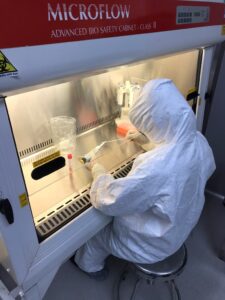
The physical mechanics of peptide reconstitution are just as critical as the chemical composition of the solvent. The lyophilized cake is a porous matrix, and the introduction of solvent must be managed to prevent localized concentration gradients and interfacial shear stress. Vigorous vortexing or high-speed pipetting can introduce micro-bubbles and generate shear forces that disrupt delicate non-covalent interactions, leading to irreversible aggregation.
Fragile research compounds like BPC-157 are particularly susceptible to interfacial shear and foaming. Best practices dictate that the solvent should be directed against the glass or plastic wall of the vial, allowing the liquid to gently cascade over the lyophilized matrix. Gentle swirling or end-over-end inversion should be employed to facilitate dissolution. If the peptide exhibits stubborn insolubility, brief sonication in a cold water bath can be utilized, but thermal energy must be strictly controlled to prevent thermal degradation of the peptide backbone.
Post-Reconstitution Analytical Verification
Successful visual dissolution does not guarantee molecular integrity. Post-reconstitution analytical verification is a mandatory step in comprehensive laboratory quality assurance. The reconstituted solution must be evaluated to confirm that the solubilization process has not induced aggregation, deamidation, or oxidation.
Utilizing HPLC is the standard method for assessing the monomeric purity and detecting any high-molecular-weight aggregates that may have formed during the reconstitution process. The resulting chromatogram should be cross-referenced with the original batch COA to ensure that the purity profile remains consistent with the manufacturer’s specifications. This rigorous verification ensures alignment with overarching Quality standards and confirms that the raw material is suitable for subsequent analytical or formulation workflows.
| Peptide Class | Primary Solvent | Co-Solvent / Additive | Key Handling Parameter |
|---|---|---|---|
| Hydrophilic / Short Sequence | Bacteriostatic Water | None required | Gentle inversion; avoid vortexing |
| Hydrophobic / Lipidated | Alkaline Buffer (pH 8-9) | Acetonitrile or DMSO | Slow solvent addition; monitor for precipitation |
| Metal-Bound Complexes | Ultra-pure Water | Strict pH control (avoid extremes) | Protect from light; minimize headspace oxygen |
| Fragile / Aggregation-Prone | Specific Buffer System | Non-ionic surfactants (if compatible) | Wall-directed solvent addition; cold sonication if needed |
PeptaCo supplies materials for qualified research, analytical, and formulation-development purposes. Products are not intended for direct consumer use.