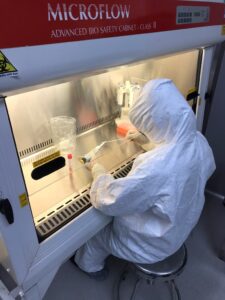
Introduction to Peptide Reconstitution in Analytical Workflows
The transition of a peptide from a solid-state lyophilized matrix to a liquid solution is a critical juncture in analytical workflows and formulation development. Peptide reconstitution is not merely a mechanical mixing process; it is a complex thermodynamic event that dictates the structural integrity, solubility, and downstream analytical accuracy of the raw material. For quality control laboratories, compounding pharmacies, and cosmetic OEMs, establishing rigorous reconstitution protocols is essential to ensure that the final solution accurately reflects the purity and concentration verified in the original COA.
Improper solvation can lead to peptide aggregation, hydrolysis, or adsorption to container surfaces, all of which introduce variance into quantitative assays. By standardizing reconstitution workflows, organizations can maintain strict Quality benchmarks, ensuring that analytical reference standards and formulation matrices remain stable and representative of the bulk raw material.
Solvent Selection and Matrix Thermodynamics
The foundation of a successful reconstitution protocol lies in solvent selection. The chosen vehicle must overcome the intermolecular forces holding the lyophilized peptide cake together without inducing conformational stress or chemical degradation. Solvent polarity, pH, and ionic strength must be carefully matched to the peptide’s isoelectric point (pI) and hydrophobicity profile.
For highly hydrophobic research compounds, such as certain Semaglutide analogs, aqueous buffers alone may be insufficient. In these cases, the introduction of co-solvents or mild surfactants is often required to disrupt the solid-state matrix and facilitate complete solvation. Conversely, hydrophilic sequences like BPC-157 typically reconstitute readily in sterile bacteriostatic water or standard saline matrices, provided the pH is optimized to prevent self-association.
Temperature also plays a pivotal role in solvation thermodynamics. While room temperature is standard for many peptides, some complex matrices may require gentle warming to 37°C to lower the activation energy for dissolution. However, thermal stress must be strictly controlled to avoid accelerating deamidation or oxidation pathways, which would compromise the analytical validity of the reconstituted sample.
Standardized Reconstitution Protocols for Lab QA
To minimize batch-to-batch variance, laboratories must implement standardized operating procedures for peptide reconstitution. The physical handling of the lyophilized cake directly impacts the homogeneity of the final solution.
- Temperature Equilibration: Allow the lyophilized vial to reach ambient temperature before opening. This prevents moisture condensation from the ambient environment from prematurely hydrating the hygroscopic peptide matrix.
- Directed Solvent Addition: Direct the flow of the solvent gently against the interior wall of the vial rather than directly onto the lyophilized cake. High-velocity impingement can cause foaming and mechanical shearing of the peptide chains.
- Controlled Agitation: Utilize gentle swirling or inversion to dissolve the matrix. Vortexing should be avoided unless specifically validated for a particular sequence, as cavitation and shear stress can induce irreversible aggregation.
- Resting Period: Allow the solution to rest for a defined period post-mixing. This ensures complete solvation of the matrix and allows any micro-bubbles introduced during agitation to dissipate, which is critical for accurate volumetric pipetting.
Post-Reconstitution Analytical Verification
Once the peptide is fully solubilized, post-reconstitution analytical verification is required to confirm that the liquid matrix matches the solid-state specifications. This step is particularly vital for cosmetic OEMs integrating active sequences like SNAP-8 into complex emulsion systems, where residual insoluble particulates could disrupt interfacial stability.
Orthogonal analytical techniques are employed to verify concentration and structural integrity post-reconstitution. HPLC is utilized to quantify the peptide and assess the emergence of any new degradation peaks, while Mass Spectrometry confirms the exact molecular weight and ensures no unintended modifications occurred during the solvation process.
| Analytical Technique | Target Parameter | QA Acceptance Criteria |
|---|---|---|
| UV-Vis Spectrophotometry | Initial Concentration Estimate | Within 95-105% of theoretical yield |
| Reverse-Phase HPLC | Purity and Soluble Impurities | Matches original COA; no new peaks > 0.10% |
| ESI-MS / LC-MS | Molecular Weight Verification | Matches theoretical mass within ± 1 Da |
| Visual Inspection | Particulate Matter and Clarity | Clear, colorless; free of visible aggregates |
For organizations engaged in extensive OEM/ODM formulation development, these verification steps ensure that the reconstituted active ingredient will perform predictably when introduced into the final product matrix.
Maintaining Matrix Integrity During Scale-Up
Transitioning from analytical-scale reconstitution to pilot or commercial scale-up introduces new fluid dynamics and mass transfer challenges. At larger volumes, achieving uniform solvation without introducing shear-induced degradation requires specialized mixing equipment and validated scale-up factors.
Redox-sensitive raw materials, such as Glutathione, require particular attention during scale-up. The increased surface area exposed to the headspace in large-scale vessels can accelerate oxidation if inert gas blanketing is not properly implemented. Furthermore, the selection of construction materials for large-scale mixing vessels must account for the potential adsorption of the peptide to stainless steel or polymer surfaces, which can lead to significant yield loss.
By rigorously controlling solvent matrices, physical handling, and post-solubilization analytics, B2B buyers and formulation scientists can ensure that peptide reconstitution consistently yields high-integrity solutions. This disciplined approach safeguards the analytical validity of the raw material and supports the robust manufacturing of downstream research and cosmetic applications.
PeptaCo supplies materials for qualified research, analytical, and formulation-development purposes. Products are not intended for direct consumer use.