The Role of Endotoxin Testing in Peptide Supply Chains
In the procurement of peptide raw materials, ensuring the biochemical integrity of the final product requires a multifaceted analytical approach. Among the most critical parameters in this framework is endotoxin testing. Bacterial endotoxins, primarily lipopolysaccharides derived from the outer membrane of Gram-negative bacteria, can inadvertently contaminate peptides during solid-phase synthesis, cleavage, or downstream processing. For OEM/ODM facilities, compounding pharmacies, and research laboratories, verifying exceptionally low endotoxin levels is a baseline Quality requirement.
Endotoxin testing is not merely a regulatory checkbox; it is a fundamental indicator of the overall hygienic and analytical rigor applied during manufacturing. High endotoxin loads can indicate poor environmental controls, inadequate water-for-injection (WFI) quality, or insufficient purification steps. Consequently, buyers and quality assurance teams must critically evaluate the analytical methodologies used to quantify these contaminants, ensuring that the reported data on a Certificate of Analysis accurately reflects the true state of the raw material.
Analytical Challenges and Matrix Interference
The most widely accepted methodologies for endotoxin testing include the Limulus Amebocyte Lysate (LAL) assay and the recombinant Factor C (rFC) assay. Both rely on enzymatic cascades that result in a measurable colorimetric, turbidimetric, or fluorometric signal. However, peptide matrices are notoriously complex and can introduce significant analytical interference.
Peptides can inhibit or enhance the enzymatic cascade, leading to false negatives or artificially inflated readings. This matrix interference is highly dependent on the specific amino acid sequence, the presence of specific counterions, and the overall physicochemical properties of the peptide. For instance, research compounds with strong redox properties, such as GHK-Cu or Glutathione, may interact with the chromogenic substrates used in kinetic assays, necessitating rigorous interference testing.
To mitigate these challenges, analytical laboratories must perform spike-and-recovery studies. By spiking a known concentration of Control Standard Endotoxin (CSE) into the peptide matrix, analysts can determine the percentage of recovery. A recovery rate between 50% and 200% is generally acceptable, but optimal validation aims for 80% to 120%. If interference is detected, the matrix must be diluted, pH-adjusted, or subjected to chelation to neutralize the inhibitory or enhancing effects before accurate quantification can occur.
Downstream Purification and Clearance Dynamics
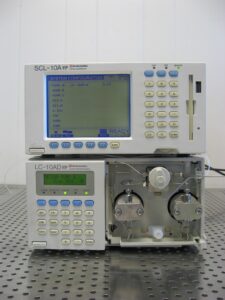
Because analytical interference can complicate direct testing, the physical removal of endotoxins during downstream purification is equally critical. Reversed-phase HPLC is the gold standard for peptide purification and is highly effective at clearing lipopolysaccharides.
Endotoxins are large, amphiphilic molecules with high molecular weights, whereas synthetic peptides are relatively small and possess distinct polarity profiles. During reversed-phase chromatography, the hydrophobic interactions retain the peptide on the stationary phase while endotoxins, due to their massive size and complex aggregation behavior, often elute in the void volume or are washed away during the initial equilibration and loading phases.
However, the clearance dynamics become more complex with lipidated or long-chain research compounds such as Semaglutide or Tirzepatide. The conjugation of fatty acid chains increases the overall hydrophobicity of the peptide, which can alter its retention time and potentially cause co-elution with lipophilic impurities, including endotoxin aggregates. In these scenarios, optimizing the gradient elution strategy and utilizing specialized stationary phases are essential to ensure complete separation and absolute endotoxin clearance.
Method Validation Parameters for Endotoxin Testing
When evaluating a supplier’s analytical capabilities, it is vital to review their method validation protocols for endotoxin testing. A robust validation ensures that the assay is reliable, reproducible, and specific to the peptide matrix in question.
| Validation Parameter | Description in Peptide Matrices |
|---|---|
| Specificity | Confirms that the peptide matrix does not trigger the assay cascade independently of the endotoxin presence. |
| Linearity | Demonstrates a proportional signal response across a defined range of endotoxin concentrations within the specific buffer. |
| Accuracy (Recovery) | Validated via spike-and-recovery experiments to ensure matrix inhibition or enhancement is within acceptable limits. |
| Precision | Evaluates the repeatability (intra-assay) and intermediate precision (inter-day, inter-analyst) of the endotoxin quantification. |
| Limit of Quantitation | Establishes the lowest concentration of endotoxin that can be reliably quantified in the presence of the peptide matrix. |
Suppliers who provide comprehensive validation data alongside their COA demonstrate a higher level of analytical maturity. Buyers should specifically look for the maximum valid dilution (MVD) reported on the documentation, as this indicates the exact conditions under which the assay was validated to be free of interference.
Strategic Sourcing and Raw Material QA
Integrating endotoxin testing into a broader raw material qualification strategy is essential for maintaining supply chain resilience. When sourcing sensitive research compounds like BPC-157 or TB-500, buyers must verify that the manufacturer employs orthogonal analytical frameworks. While LAL or rFC assays quantify endotoxins, orthogonal methods such as the Monocyte Activation Test (MAT) can be utilized for complex matrices where traditional lysate assays consistently fail validation.
Furthermore, strategic sourcing involves auditing the supplier’s environmental controls, water systems, and primary packaging integrity. Endotoxin contamination is often a symptom of broader systemic failures in a manufacturing facility. By prioritizing suppliers who maintain rigorous environmental monitoring and employ advanced purification technologies, research organizations and formulation developers can ensure the analytical integrity of their peptide raw materials.
Ultimately, endotoxin testing is a critical pillar of peptide quality assurance. Through rigorous method validation, optimized purification strategies, and critical evaluation of analytical data, buyers can secure high-purity raw materials that meet the exacting standards of modern biochemical research and formulation development.
PeptaCo supplies materials for qualified research, analytical, and formulation-development purposes. Products are not intended for direct consumer use.