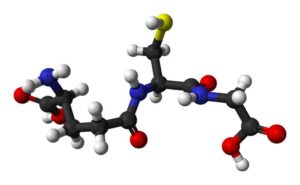
Structural Dynamics and Thiol Group Reactivity
Glutathione (γ-glutamylcysteinylglycine) is a ubiquitous tripeptide that serves as a critical redox buffer in both biological research and advanced cosmetic formulations. The chemical architecture of the Glutathione molecule is defined by its unique peptide bond linking glutamate to cysteine, and the highly reactive thiol (-SH) group present on the cysteine residue. This thiol moiety is the primary site of redox activity, but it also introduces significant stability challenges during raw material handling and storage.
In its reduced state (GSH), the molecule is highly susceptible to environmental oxidation, which can lead to the formation of glutathione disulfide (GSSG). Recent advances in understanding disulfide-constrained peptide architectures and intracellular coordination highlight the delicate balance required to maintain thiol integrity. For B2B buyers and formulation scientists, managing this reactivity is paramount. The transition from GSH to GSSG alters the physicochemical profile of the raw material, necessitating rigorous environmental controls and specialized packaging to prevent premature oxidation before the material reaches the OEM/ODM production suite.
Formulation Matrix Integration for OEMs
Integrating glutathione raw material into complex cosmetic or research matrices requires a deep understanding of solvent thermodynamics and excipient compatibility. The efficacy of GSH in a final formulation is heavily dependent on the pH of the matrix and the presence of stabilizing agents. In cosmetic OEM applications, GSH is often combined with other bioactive peptides to create synergistic antioxidant networks. For instance, formulators frequently pair it with NAD+ or GHK-Cu to leverage complementary redox and structural signaling pathways, though the compatibility of these compounds must be verified through accelerated stability testing.
The solubility profile of GSH allows for its incorporation into aqueous-based systems, but the presence of transition metals or high pH environments can catalyze auto-oxidation. Therefore, matrix optimization often involves the inclusion of chelating agents and the strict regulation of the formulation’s pH to the slightly acidic range. Successful integration requires iterative prototyping, ensuring that the peptide retains its structural integrity without interacting adversely with preservatives, surfactants, or other active excipients in the final product matrix.
Advanced Chromatographic and Spectrometric Verification
Verifying the identity and purity of glutathione raw material demands orthogonal analytical frameworks. Relying on a single analytical method is insufficient for comprehensive Quality assurance. High-Performance Liquid Chromatography (HPLC) remains the gold standard for quantifying the ratio of reduced GSH to oxidized GSSG. By utilizing reversed-phase columns with carefully optimized gradient elution profiles, analysts can effectively separate the target tripeptide from closely eluting impurities, deletion sequences, and oxidation products.
Complementing chromatographic separation, Mass Spectrometry provides definitive structural verification. High-resolution mass spectrometry (HRMS) allows for the exact mass determination of the molecular ion, confirming the amino acid sequence and identifying any isobaric impurities. When reviewing a Certificate of Analysis (COA), B2B buyers should look for comprehensive data that includes both chromatographic purity percentages and mass spectrometric confirmation. This dual-verification approach ensures that the raw material meets the stringent specifications required for high-end cosmetic and research applications.
| Analytical Method | Target Parameter | Acceptance Criteria |
|---|---|---|
| Reversed-Phase HPLC | Purity and GSH/GSSG Ratio | ≥ 98.0% GSH; GSSG ≤ 1.0% |
| HRMS (ESI-TOF) | Exact Mass Verification | Within ± 5 ppm of theoretical mass |
| Amino Acid Analysis | Sequence and Molar Ratio | Glu:Cys:Gly ratio of 1:1:1 |
| Karl Fischer Titration | Residual Moisture Content | ≤ 3.0% w/w |
Supply Chain and Quality Assurance Protocols
The procurement of high-grade glutathione raw material extends beyond analytical verification; it encompasses the entire supply chain lifecycle. Because of the molecule’s sensitivity to moisture and oxygen, primary packaging must utilize high-barrier materials, often under an inert atmosphere such as argon or nitrogen. Secondary packaging and cold-chain logistics further mitigate the risk of thermal degradation during transit.
For compounding pharmacies and research organizations, establishing a robust supplier qualification checklist is essential. This includes evaluating the manufacturer’s adherence to current Good Manufacturing Practices (cGMP), their environmental monitoring protocols, and their traceability systems. By prioritizing suppliers that demonstrate transparent supply chain management and rigorous batch-to-batch consistency, organizations can ensure the reliable delivery of raw materials that meet the exacting standards of modern peptide formulation and analytical research.
PeptaCo supplies materials for qualified research, analytical, and formulation-development purposes. Products are not intended for direct consumer use.