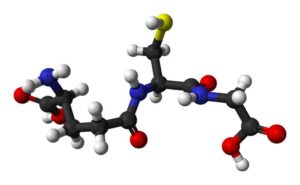
Conformational Dynamics of the Glutathione Tripeptide
The glutathione raw material represents a cornerstone tripeptide in advanced in vitro research and cosmetic OEM/ODM formulations. Composed of glutamate, cysteine, and glycine, its unique γ-peptide bond distinguishes it from standard linear peptides, conferring specific resistance to standard peptidases. For B2B buyers, understanding the structural nuances of this molecule is critical for maintaining Quality across the supply chain.
Unlike complex macrocyclic architectures or engineered peptide frameworks that rely on rigid intracellular coordination, glutathione exists in a highly dynamic conformational equilibrium in solution. The thiol (-SH) group on the cysteine residue dictates its reactivity, while the zwitterionic nature of the molecule at physiological pH influences its solubility and interaction with formulation excipients. In raw material sourcing, preserving this specific conformational state requires stringent environmental controls during transit and storage.
Oxidative Kinetics and Supply Chain Vulnerabilities
The primary degradation pathway for the glutathione molecule involves the oxidation of its free thiol group, leading to the formation of glutathione disulfide (GSSG). This oxidative kinetics is accelerated by elevated temperatures, ambient humidity, and trace metal catalysis. Supply chain logistics must therefore prioritize desiccated, temperature-controlled environments to mitigate thermodynamic degradation.
When evaluating a Certificate of Analysis (COA), buyers must scrutinize the reduced glutathione (GSH) to oxidized glutathione (GSSG) ratio to ensure the material has not undergone premature oxidative degradation during freight. Advanced packaging protocols, including nitrogen flushing and the use of amber glass or high-barrier metallized films, are non-negotiable for preserving the redox integrity of the raw material upon arrival at the laboratory or manufacturing facility.
Advanced Analytical Verification Protocols
Verifying the structural integrity of the glutathione raw material requires orthogonal analytical methodologies. Relying on a single assay is insufficient for high-grade B2B procurement. The following table outlines the core analytical framework utilized for comprehensive verification:
| Analytical Technique | Target Parameter | Application in Glutathione QA |
|---|---|---|
| HPLC | Purity and GSSG quantification | Separates reduced glutathione from its oxidized disulfide dimer and synthetic impurities using optimized gradient elution. |
| Mass Spectrometry | Intact mass and structural confirmation | Verifies the exact molecular weight and confirms the absence of truncated peptide sequences or adducts. |
| Karl Fischer Titration | Residual moisture content | Ensures the lyophilized or crystalline powder meets strict hygroscopic thresholds to prevent hydrolytic degradation. |
| Specific Rotation | Optical purity | Confirms the stereochemical integrity of the L-amino acid constituents, ensuring no racemization occurred during synthesis. |
During HPLC analysis, the use of C18 columns with appropriate ion-pairing agents, such as trifluoroacetic acid, is standard practice. Detection is typically performed via UV absorption at 214 nm to capture the peptide bond, though monitoring at 254 nm can assist in identifying specific aromatic impurities. Concurrently, Mass Spectrometry utilizing electrospray ionization (ESI) in positive or negative mode provides definitive confirmation of the tripeptide’s exact mass, safeguarding against the receipt of adulterated or mislabeled bulk powders.
OEM Formulation Integration and Cross-Peptide Synergies
In cosmetic and research formulation development, glutathione is frequently evaluated alongside other bioactive peptides. For instance, in advanced dermal research models, it is often co-formulated with copper-binding peptides like GHK-Cu to study cellular matrix remodeling, or alongside coenzymes such as NAD+ to investigate in vitro metabolic pathways.
When integrating glutathione raw material into complex matrices, formulators must account for its redox potential, ensuring that excipient compatibility does not inadvertently trigger oxidation. Proper pH buffering and the exclusion of pro-oxidant trace metals are paramount in the final formulation architecture. Furthermore, formulators should avoid reducing sugars that might introduce unforeseen Maillard reaction pathways during long-term stability studies.
PeptaCo supplies materials for qualified research, analytical, and formulation-development purposes. Products are not intended for direct consumer use.