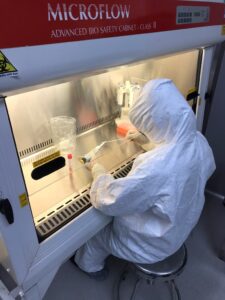
Proper lyophilized peptide handling is a critical operational parameter for maintaining the structural integrity of high-value research compounds. When procuring raw materials for OEM/ODM applications, compounding formulation development, or analytical reference standards, the physical state of the lyophilized plug dictates downstream viability. The transition from liquid solution to a solid, porous matrix via sublimation creates a highly hygroscopic structure that demands rigorous supply chain controls.
For B2B buyers and laboratory directors, understanding the thermodynamic and mechanical factors that preserve this matrix is essential. This analysis explores the critical intersections of crimp seal integrity, headspace dynamics, and desiccation protocols required to maintain raw material stability during transit and storage.
The Physics of the Lyophilized Matrix
The lyophilization process removes water through sublimation under vacuum, leaving behind a highly porous solid matrix. This architecture maximizes the surface area of the peptide, which is highly advantageous for rapid solubilization during reconstitution. However, this same high surface area renders the compound exceptionally vulnerable to moisture ingress and subsequent degradation pathways, such as deamidation or aggregation.
During primary drying, ice crystals are removed, forming the macro-porous structure. Secondary drying then removes unfrozen, bound water molecules. The residual moisture content must be tightly controlled, typically保持在 1% to 3% by weight, depending on the specific amino acid sequence. If the matrix absorbs atmospheric moisture post-lyophilization, the glass transition temperature of the formulation drops, leading to matrix collapse, loss of porosity, and accelerated chemical degradation.
Maintaining this delicate thermodynamic equilibrium requires that the primary packaging system provides an absolute barrier against environmental humidity from the moment the vial is stoppered in the lyophilizer chamber until the end of its validated shelf life.
Crimp Seal Dynamics and Headspace Control
The elastomeric stopper and the aluminum crimp seal constitute the primary barrier system for lyophilized materials. The selection of the stopper formulation is a critical quality attribute. Elastomers must exhibit low moisture vapor transmission rates (MVTR), minimal gas permeability, and high chemical inertness to prevent the leaching of extractables into the peptide matrix.
Furthermore, the mechanical application of the aluminum crimp is vital. Insufficient crimping force can lead to micro-channeling around the glass neck, while excessive force can induce stress fractures in the glass vial or compromise the elastomer’s sealing lip. The headspace within the vial also plays a role; inert gas flushing (such as nitrogen or argon) prior to stoppering displaces oxygen and moisture, creating a stable microenvironment.
| Stopper Material | Moisture Vapor Transmission (MVTR) | Chemical Reactivity | Typical Application |
|---|---|---|---|
| Chlorobutyl | Low | Excellent inertness | Standard lyophilized research compounds |
| Bromobutyl | Very Low | Superior cross-linking | Long-term storage of highly sensitive sequences |
| Fluoroelastomer | Negligible | Maximum chemical resistance | Specialized analytical references and OEM formulations |
Desiccation Protocols and Cold Chain Logistics
Even with optimal primary packaging, secondary packaging and logistics protocols must mitigate thermal and hygroscopic shocks. During transit, temperature fluctuations can cause microscopic expansion and contraction of the vial components, potentially compromising the seal integrity. To counteract this, advanced cold chain logistics utilize phase change materials (PCMs) and vacuum insulated panels to maintain a strict thermal buffer.
Complex, long-chain research compounds such as Semaglutide, Tirzepatide, and Retatrutide are particularly susceptible to thermal stress due to their intricate secondary structures. Proper lyophilized peptide handling mandates that these compounds are shipped with continuous temperature monitoring data loggers to verify that the cold chain was never breached.
For cosmetic and dermatological research applications, compounds like GHK-Cu and SNAP-8 also require stringent desiccation protocols. Secondary packaging often includes desiccants such as silica gel or molecular sieves within the outer carton to capture any ambient moisture that might permeate the secondary barrier, ensuring the primary vial seal remains unchallenged by external humidity gradients.
Analytical Verification Post-Transit
Upon receipt of raw materials, qualified laboratories must perform incoming Quality checks to verify that the supply chain protocols were effective. This begins with a visual inspection of the lyophilized plug for signs of collapse, melting, or moisture-induced clumping, followed by a rigorous review of the manufacturer’s COA.
To independently verify the residual moisture content, Karl Fischer coulometric titration is the industry standard. This highly sensitive technique quantifies trace water levels, ensuring the matrix has not absorbed moisture during transit. If moisture levels exceed the established thresholds, the batch is flagged for further investigation.
Subsequent analytical verification relies on HPLC to assess chromatographic purity and detect any degradation products that may have formed due to minor thermal or hygroscopic excursions. Finally, Mass Spectrometry is employed to confirm the exact molecular weight and sequence identity of the peptide, ensuring that no structural modifications, such as oxidation or deamidation, have occurred. This orthogonal analytical framework guarantees that the raw material meets the stringent specifications required for advanced formulation and research applications.
PeptaCo supplies materials for qualified research, analytical, and formulation-development purposes. Products are not intended for direct consumer use.