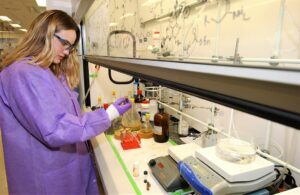
In the B2B peptide supply chain, maintaining the structural and chemical integrity of raw materials from synthesis to final analytical evaluation is a paramount concern. For compounding pharmacies, cosmetic OEMs, and research organizations, implementing rigorous peptide storage best practices is not merely a logistical formality; it is a critical quality assurance (QA) metric. Whether handling complex receptor research compounds or oxidation-sensitive antioxidants, the physical environment dictates the shelf-life and analytical purity of the material. This analysis explores the foundational elements of primary packaging, cold-chain logistics, and desiccation strategies required to safeguard high-value peptide raw materials.
Primary Packaging Selection for Peptide Storage Best Practices
The selection of primary packaging is the first line of defense against environmental degradation. For lyophilized research compounds, Type I borosilicate glass vials remain the industry standard due to their superior chemical resistance and low extractable profiles. However, surface adsorption can still occur with highly hydrophobic sequences. In such cases, cyclic olefin polymers (COP) or cyclic olefin copolymers (COC) offer a low-protein-binding alternative that minimizes active material loss to the container walls.
When sourcing sensitive analytical references such as Semaglutide or Tirzepatide, buyers must verify that the supplier utilizes halogenated butyl rubber stoppers with appropriate fluoropolymer coatings. Uncoated elastomers can leach plasticizers and sulfur compounds, which may catalyze oxidative degradation pathways. Adherence to strict Quality protocols ensures that the container closure system (CCS) does not introduce exogenous impurities that would complicate downstream HPLC profiling.
Cold-Chain Logistics and Temperature Excursions
Temperature control during B2B transit is a critical vector in peptide storage best practices. Lyophilized peptides are generally stable at ambient temperatures for short durations, but prolonged exposure to elevated thermal conditions accelerates deamidation and aggregation. For long-term archival storage and international shipping, maintaining a continuous cold-chain (typically 2°C to 8°C, or -20°C for extended periods) is mandatory.
Supply chain managers must utilize validated thermal shippers equipped with phase-change materials (PCMs) to buffer against external temperature fluctuations. Monitoring devices, such as digital data loggers, should be included in every shipment to record the mean kinetic temperature (MKT) and identify any transient excursions. This is especially vital for oxidation-prone raw materials like Glutathione, where thermal stress can rapidly deplete the thiol groups necessary for its redox properties. Documented cold-chain integrity is a prerequisite for batch release and ensures that the material arrives in a state suitable for rigorous laboratory evaluation.
Desiccation Strategies for Hygroscopic Matrices
Moisture ingress is the primary catalyst for hydrolytic cleavage in peptide bonds. Many peptide sequences are highly hygroscopic, meaning they will actively absorb ambient moisture if the headspace is not properly controlled. Implementing effective desiccation strategies is a core component of peptide storage best practices.
For solid-state storage, the integration of desiccants such as silica gel or molecular sieves within the secondary packaging is standard. The choice of desiccant depends on the required residual moisture level and the specific hygroscopicity of the peptide matrix. In cosmetic OEM applications, where materials like SNAP-8 are integrated into complex emulsion matrices, the initial moisture content of the raw material must be strictly controlled to prevent premature hydrolysis before OEM/ODM formulation begins. Vials should be sealed under an inert atmosphere, such as nitrogen or argon, to displace oxygen and moisture, further mitigating the risk of oxidative and hydrolytic degradation.
Analytical Verification and Post-Storage QA
Even with optimal packaging and cold-chain logistics, post-storage analytical verification is essential to confirm that the material has not degraded. Re-testing upon receipt at the buyer’s facility ensures that the analytical profile matches the original Certificate of Analysis.
Orthogonal analytical techniques are employed to verify structural integrity. Mass Spectrometry is utilized to confirm the intact molecular weight and identify any mass shifts indicative of oxidation or deamidation. Chromatographic methods assess the purity profile, ensuring that degradation products remain below acceptable thresholds. The updated COA should reflect these post-storage metrics, providing full traceability and confidence in the raw material’s suitability for its intended research or formulation application.
| Storage Parameter | Risk if Uncontrolled | Mitigation Strategy | Analytical Verification |
|---|---|---|---|
| Temperature | Accelerated deamidation, aggregation | Validated cold-chain transit, 2-8°C storage | Size Exclusion Chromatography (SEC), HPLC |
| Moisture / Headspace | Hydrolytic cleavage, cake collapse | Inert gas flush, molecular sieves, tight CCS | Karl Fischer Titration, Lyophilizate visual inspection |
| Oxygen Exposure | Methionine/Cysteine oxidation | Nitrogen/Argon overlay, oxygen-impermeable vials | Mass Spectrometry, Peptide Mapping |
| Light Exposure | Photolytic degradation, discoloration | Amber glass vials, opaque secondary packaging | UV-Vis Spectrophotometry, Visual Inspection |
Implementing comprehensive peptide storage best practices requires a holistic approach that integrates primary packaging science, rigorous cold-chain logistics, and proactive desiccation. By controlling these environmental vectors, B2B buyers can ensure the analytical integrity and functional reliability of their peptide raw materials.
PeptaCo supplies materials for qualified research, analytical, and formulation-development purposes. Products are not intended for direct consumer use.